Philadelphia skyline

alternative investments · fintech · investor behavior

research.

Published papers

The Role of Taxes in the Rise of ETFs

with Rabih Moussawi and Ke Shen

Review of Financial Studies, Volume 38, Issue 10, October 2025, Pages 2988–3039

Abstract: This paper argues that a lesser-known yet economically significant tax-deferral feature of ETFs' security design is crucial to their success. By relying on the in-kind redemption exemption, authorized participants help ETFs avoid distributing capital gains and reduce their tax overhang, partly by deploying heartbeat trades. We estimate that the ETF tax efficiency has increased long-term investors' after-tax returns by 1.05% per year relative to mutual funds in recent years. Exploiting cross-sectional and time-series variations in investors' tax burden, we show that tax efficiency is a significant driver of capital migration by high-net-worth investors from mutual funds into ETFs.

Conference presentations: Financial Management Association (2020), American Finance Association (2021), Dayton Summer Finance Workshop (2021), University of North Carolina Tax Symposium (2022), Chicago Quantitative Alliance Spring Conference (2022), Southern Finance Association (2022), Smokey Mountain Finance Conference (2023).

Invited presentations: Syracuse University (2021), University of Iowa (2022), Hong Kong Polytechnic University (2022), University of Kansas (2024), Office of Financial Research (2024), Gabelli Funds Conference (2024).

Featured in: Financial Times (15 Feb 2021) · ETF Trends (17 Feb 2021) · Harvard Law School Forum (22 May 2025) · The Economist (26 Jun 2025) · Bloomberg (21 Jul 2025) · Alpha Architect (7 Nov 2025) · Brookings (21 May 2026) · Bloomberg (7 Jun 2026)

Policy impact: cited in Brookings Institution research on index fund taxation that was presented in testimony before the House Financial Services Committee (June 2026).

Female CEO Selection: Does the Glass Cliff Exist?

with Xiaoxiao Li, Olivia Moyer, Olivia Pfeiffer, and Pete Zaleski

Leadership Quarterly, Volume 36, Issue 2, March 2025, 101853

Abstract: This paper revisits the glass cliff phenomenon in corporate spheres, which asserts that women predominantly advance into leadership roles in precarious times, when the chance of failure is highest. Compared to prior studies, we greatly expand the sample of female CEO appointments by extending our sample in time and breadth. Moreover, we address confounding effects and explore heterogeneous and non-linear relationships. Using a variety of accounting- and market-based variables to proxy for precarious situations, our results do not provide clear evidence of a glass cliff effect in US corporations, implying that earlier findings may have been specific to the samples and methods used.

Conference presentations: Midwest Economics Association (2022), Western Economic Association International Conference (2022), Southern Economic Association Conference (2022), Southern Finance Association (2023).

Piecing Together the Extent of Retail Fractional Trading

with David Gempesaw and Joseph Henry

Global Finance Journal, Volume 54, November 2022, Article 100757

Abstract: We examine the introduction of fractional trading and its impact on retail security ownership. Fractional trading aims to increase investor access to securities with high prices. Over the initial months of Robinhood's fractional trading program, the number of unique owners increases approximately 53 percentage points more for stocks priced above $100 versus those priced below $50. On an intraday basis, high-price stocks exhibit incremental ownership growth specifically during periods when fractional trading is permitted. Our results show that Robinhood investors make ample use of fractional trading to acquire previously inaccessible securities, indicating a substantial reduction in price-based investing frictions and carrying implications for retail portfolio management. In addition, we show that the potential market impacts of fractional trading activity appear negligible based on share volume data from multiple brokers with fractional trading programs.

How did Retail Investors Respond to the COVID-19 Pandemic? The Effect of Robinhood Brokerage Customers on Market Quality

with Michael Pagano and John Sedunov

Finance Research Letters, Volume 43, November 2021, Article 101946

Abstract: Using data on stocks held by individual investors at retail brokerage firm Robinhood, we document that these investors are actively engaged in both momentum and contrarian trading strategies. In response to the increased volatility and uncertainty in financial markets due to the COVID-19 pandemic in March 2020, we find that retail investors reduce momentum trading and increase contrarian trading activity during the initial phase of this crisis. We also find that the impact of Robinhood investors on several measures of market quality varied depending on market conditions, coinciding with better market quality during less-stressful periods and worse market quality during the early weeks of the pandemic in the U.S.

Conference presentations: IOSCO Securities Regulation Conference (2021).

Index Membership and Small Firm Financing

with Charles Cao and Matthew Gustafson

Management Science, Volume 65, Issue 9, September 2019, Pages 4156-4178

Abstract: Small public firms are subject to a bank hold-up problem whereby a bank's information monopoly precludes competition from other financing sources, leading to an overreliance on bank lending and increased borrowing costs. Exploiting quasi-random variation in Russell 2000 index assignment, we find that index membership affects how small public firms obtain financing, in a manner consistent with index membership mitigating the bank hold-up problem. Russell 2000 firms initiate 34% fewer bank loans, conduct more seasoned equity offerings, and obtain 58 basis points lower bank loan spreads than similar firms outside the index. These effects are largest for recent Russell 2000 additions and do not reverse in the year following index deletion. Overall, our findings suggest that index membership creates an information environment that increases the feasibility of non-bank financing and persists for some time after index deletion.

Conference presentations: European Finance Association (2014), Northern Finance Association Conference (2014).

Did You See What I Saw? Interpreting Others' Forecasts When Their Information Is Unknown

with Tony Kwasnica and Jared Williams

Review of Finance, Volume 23, Issue 2, March 2019, Pages 325–361

  • Finalist for the 2018/2019 Pagano/Zechner award for best non-investments paper in the Review of Finance

Abstract: How do people update their beliefs upon observing others' forecasts? We conduct a series of forecasting experiments to determine whether people can recognize that others can see news that is qualitatively similar, but distinct, from the news that they observe. We document that subjects frequently fail to revise their forecasts even though they should always revise them in our setting. This tendency is most pronounced when subjects learn that another subject observed news that is qualitatively similar ("good" or "bad") to the news that they observed. Our findings reveal concrete situations where forecasts can be expected to be biased.

Invited presentations: University of Maryland, University of Michigan, University of Notre Dame.

Style Drift: Evidence from Small-Cap Mutual Funds

with Charles Cao and Peter Iliev

Journal of Banking and Finance, 78, May 2017, pp. 42–57

Abstract: This paper documents that small-cap mutual funds allocate on average 27% of their portfolio to mid- and large-cap stocks. We find that larger and older small-cap funds are more likely to hold mid- and large-cap stocks, consistent with funds straying from their objective over time. Funds that invest heavily in mid- and large-cap stocks expose their investors to unanticipated risks but investors do not experience higher abnormal returns or performance persistence overall.

Conference presentations: Financial Management Association (2013), 1st Conference on Recent Developments in Financial Econometrics and Applications at Deakin University (2014).

Working papers

Bitcoin ETFs’ Contribution to Price Discovery

with John Sedunov and Monika Sywak

Working Paper

Conference presentations: Pacific-Basin Finance, Economics, Accounting, and Management Conference (2024), Southern Finance Association (2025).

Are Hedge Fund Capacity Constraints Binding? Evidence on Scale and Competition

with Charles Cao and Tim Simin

Working Paper

Abstract: An important question in hedge fund management is whether hedge funds experience decreasing returns to scale, as hedge fund managers often pursue arbitrage opportunities which are limited and short-lived. Using an unbiased estimation method based on recursive demeaning, we find no evidence of decreasing returns to scale at the fund level. However, we do find evidence that hedge fund returns are decreasing in industry size, consistent with competition effects.

Conference presentations: Early Career Women in Finance Conference (2017), European Finance Association (2017), Financial Management Association (2017), 10th Annual Hedge Fund and Private Equity Research Conference (2018), Midwest Finance Association (2018), Pacific-Basin Finance, Economics, Accounting, and Management Conference (2021).

Invited presentations: Federal Reserve Board of Governors, Villanova University, Securities and Exchange Commission (2017), Shenzhen Finance Institute at CUHK-Shenzhen (2021).

teaching.

Equity Markets and Valuation course

EQUITY MARKETS & VALUATION

The course provides an introduction to modern portfolio theory and stock valuation using multiples and discounted cash flow models.

View Syllabus
Derivatives course

DERIVATIVES

A course on derivatives and risk management, focusing on futures, options, and strategies for measuring and managing financial risk.

View Syllabus
Alternative Investments course

ALTERNATIVE INVESTMENTS

A course on alternative investments — hedge funds, private equity, and venture capital — taught at both the undergraduate and graduate levels.

View Syllabus

Tech Workshops

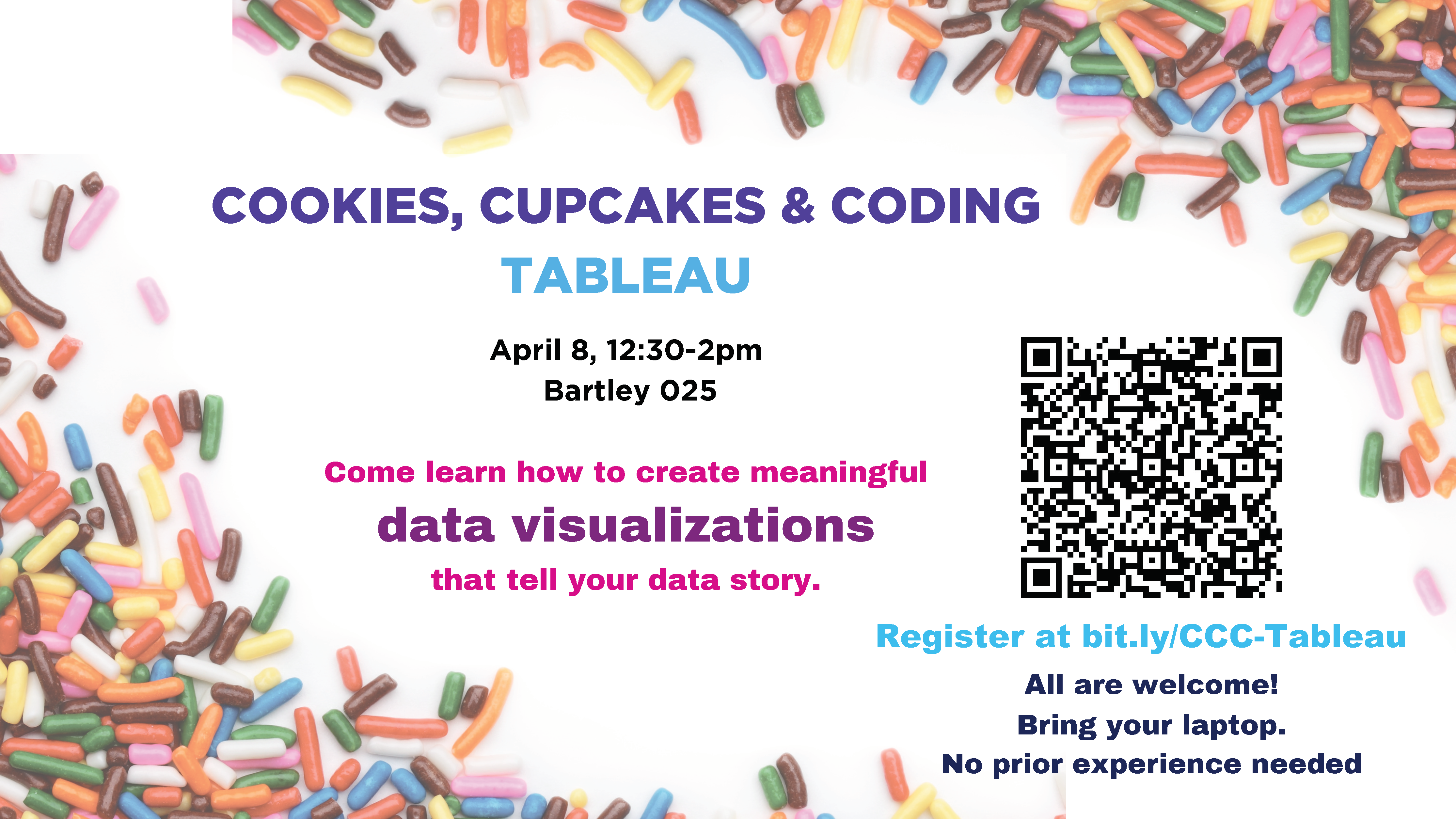
As a member of the VU Women in Tech committee, I help organize workshops on various technologies, formerly called "Cookies, Cupcakes, & Coding". Below is an overview of the events that we have held in recent years.

Fall 2025

Fall 2024 Workshop: AI Buffet

Fall 2024

Spring 2024

Fall 2023

Spring 2023

Fall 2022 Workshop: Excel Skills

Fall 2022

Spring 2022 Workshop: Tableau

Spring 2022

Fall 2021

Spring 2021 Workshop: Quantum Computing (IBMQ)

Spring 2021

Fall 2020 Workshop: OBS

Fall 2020

Spring 2020 Workshop: Machine Learning

Spring 2020

resources.

A few programs I wrote for my own research, or to replicate other researchers’ papers, are on my GitHub page. Most of my code is in SAS or Python, though I also use Matlab and Stata from time to time.

The code repository holds a SAS routine that estimates two-stage least squares with double-clustered standard errors, using proc IML and following Pástor, Stambaugh, and Taylor (2015). It also holds two bulk importers — one for Russell index constituents, one for RobinTrack data — that work on any set of Excel or CSV files sharing a common structure. QuizWrangler, in its own repository, is an AI skill that turns messy exam questions into Brightspace-ready CSV and QTI imports.

The following is a selection of websites and software products that I enjoy using:

Anaconda Distribution (Python)

Popular Python distribution for data science and machine learning

A State Of Trance

Weekly radio show and 24/7 live stream of progressive trance music

CQA

Chicago Quantitative Alliance provides resources for quant finance professionals

Gephi

Network visualization tool

Julia

Up-and-coming programming language that resembles Python and MATLAB

MATLAB

High-level programming language for simulations and matrix oriented computations

Mendeley

Reference manager

NVIDIA Broadcast

AI-powered voice and video

Overleaf

Online LaTeX editor that allows for collaboration

SAS

Statistical software suite that is very fast on large datasets

SEC Edgar

Access company filings

Slack

Collaboration software that facilitates teamwork and logs conversations

Stata

Statistical software package that makes regressions easy to perform

Wing IDE

Python source code editor with debugger

WinSCP

FTP client

Lilly Conference Poster: Thwarting Contract Cheating (May 2021)

about.

I am an Associate Professor of Finance at the Villanova School of Business (VSB), where I have taught since 2016. My research explores issues in empirical asset pricing, with a particular interest in alternative investments and fintech, focusing on how financial innovations and regulatory changes affect market dynamics and investor behavior. My work on the tax advantages drawing investors from mutual funds into ETFs was published in the Review of Financial Studies and has been covered by The Economist, Bloomberg, and the Financial Times. My other articles have appeared in leading journals including Management Science, the Review of Finance, and the Journal of Banking & Finance. My current projects examine Bitcoin ETF price discovery, ETF microstructure, and arbitrage in foreign exchange markets.

At Villanova, I teach undergraduate and graduate courses on equity markets and valuation, derivatives, and alternative investments, and serve as VSB’s representative for the CAIA Academic Partnership, which introduces students to the Chartered Alternative Investment Analyst (CAIA) program and awards exam scholarships. I was elected to the Faculty Congress and chair the University Budget Committee. I serve on the advisory board for Augie, the University’s high-performance computing cluster, and help organize the VU Women in Tech conference and its tech-oriented workshops.

Beyond VSB, I serve on the board of the Southern Finance Association and write and review questions for the CAIA charter exams as a member of the CAIA Association’s Item Review Group. I referee for journals including Management Science and the Journal of Banking & Finance, and serve on program committees for the Financial Management Association, Midwest Finance Association, Southern Finance Association, and Chicago Quantitative Alliance.

I received a B.S. and an M.S. in Econometrics and Management Science from Erasmus University Rotterdam, an M.B.A. from the University of Rochester, and a Ph.D. in Business Administration with a concentration in finance from Pennsylvania State University. I hold the CAIA and Financial Data Professional charters. I have been a Visiting Scholar at the University of Massachusetts, Amherst.

contact.

Office Information

Villanova University
Villanova School of Business
Department of Finance and Real Estate
Bartley Hall 2083
Villanova, PA 19085

Email: [email protected]