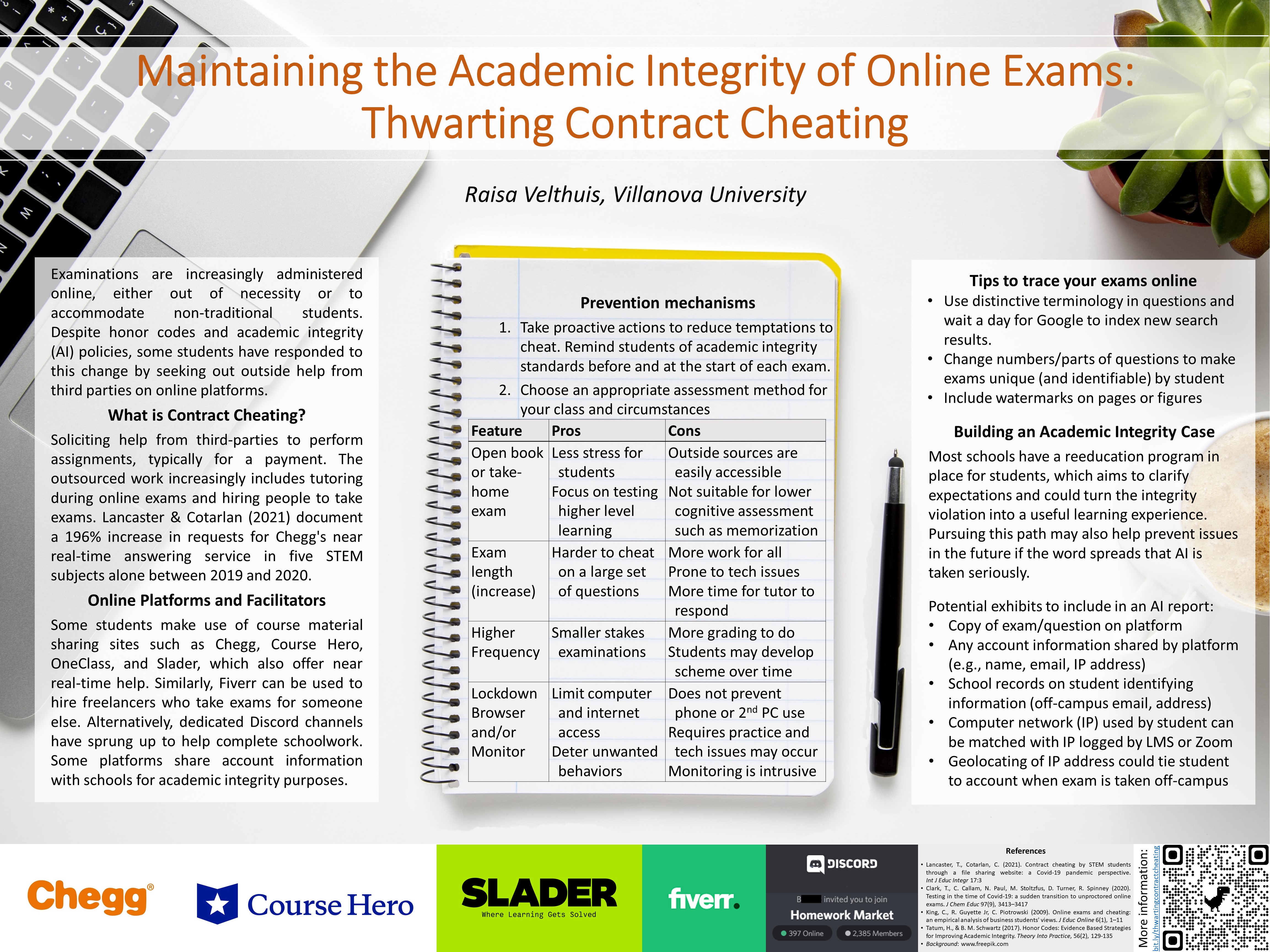
This poster familiarizes readers with currently popular course material sharing and tutoring platforms, highlights methods to address or prevent academic integrity issues, and provides suggestions for building a strong academic integrity violation case to hold offenders accountable as needed.
References
- Lancaster, T., Cotarlan, C. (2021). Contract cheating by STEM students through a file sharing website: a Covid-19 pandemic perspective. Int J Educ Integr 17:3
- Clark, T., C. Callam, N. Paul, M. Stoltzfus, D. Turner, R. Spinney (2020). Testing in the time of Covid-19: a sudden transition to unproctored online exams. J Chem Educ 97(9), 3413–3417
- King, C., R. Guyette Jr, C. Piotrowski (2009). Online exams and cheating: an empirical analysis of business students' views. J Educ Online 6(1), 1–11
- Tatum, H., & B. M. Schwartz (2017). Honor Codes: Evidence Based Strategies for Improving Academic Integrity. Theory Into Practice, 56(2), 129–135
Additional Resources
- Institutional Toolkit to Combat Contract Cheating report, by the International Center for Academic Integrity
- Chegg Honor Shield, where instructors can upload exam questions to be shielded during a 6-hour window
- Chegg Honor Code investigation request
- Chegg Copyright takedown request